 Jack Geldard
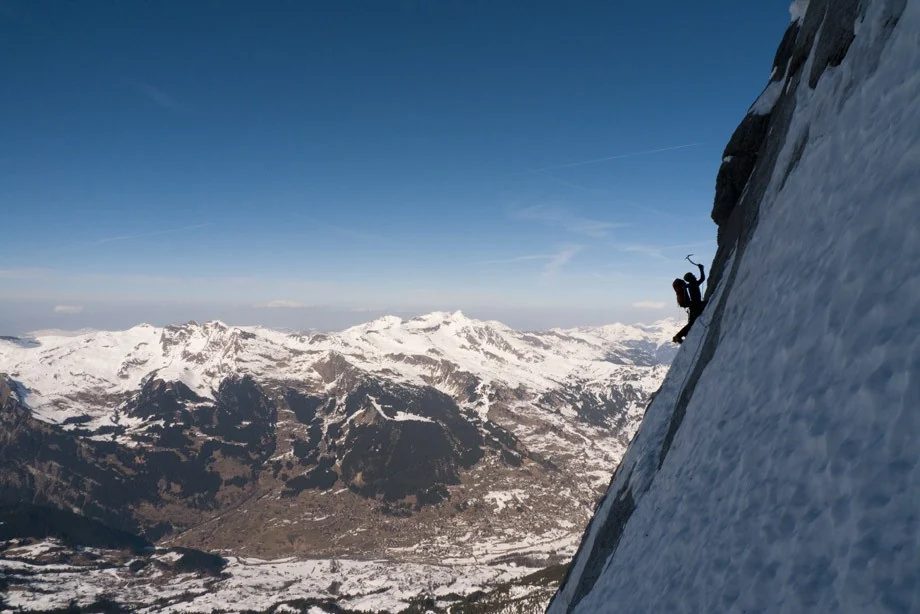
Rob Greenwood on the Hinterstoisser Traverse.
The first time I tried the north face of the Eiger, luckily I didn't even reach the bottom, never mind the top.
It was the winter of 2003, my first winter climbing big mountains, and Pete Waite-Shores and I had spent a couple of months living in my beat-up old Renault Trafic in the Grands Montets car park in Argentière, doing alpine winter routes with varying levels of success. Route conditions were hard to come by, there was a lot of snow, and in all honesty, I was clueless. So naturally when Pete suggested the Eiger, I thought - yes!
We drove the van to Grindelwald (it barely made it), parked up and looked at the face. Metres of fresh snow. Nobody was going anywhere. We planned to sit it out in the valley for a few days to let the snow settle, but the Grindelwald police had other ideas, and moved us on with standard Swiss efficiency. No camping here. That was, thankfully, the end of that.
Most of the small successes I had that season were down to a friend of mine, Jules Cartwright. Jules was an aspirant guide living in Chamonix, and he was my main source of knowledge: which routes were in, which ones were too hard, and now and again lining me up with a partner when I needed one. He was dry-witted, could drink as hard as he climbed, and was hugely experienced. His tales of the greater ranges made the Chamonix mountains seem a little smaller. I once told him I needed stronger legs for alpine climbing. He dismissed me with, "You only need legs when your lungs don't work."
In the summer of 2004, Jules and his client were killed on the Piz Badile. Mostly, I felt confused. If it could happen to someone like Jules, what chance did I have? I was 23, and my handful of alpine winter routes had been mostly misadventures. Guiding, I decided, wasn't the career for me. That ambition dimmed, and it stayed that way for over a decade.
By 2011 a lot had changed. Seven years of climbing big routes, from alpine faces to big walls around the world, and learning from experienced alpinists, had taught me more than I realised. The other big change was the internet. In 2003 the best route information came from people like Jules, if you were lucky enough to know one. By 2011 much of it was online for anyone to read, even if the judgement to use it still had to be earned.
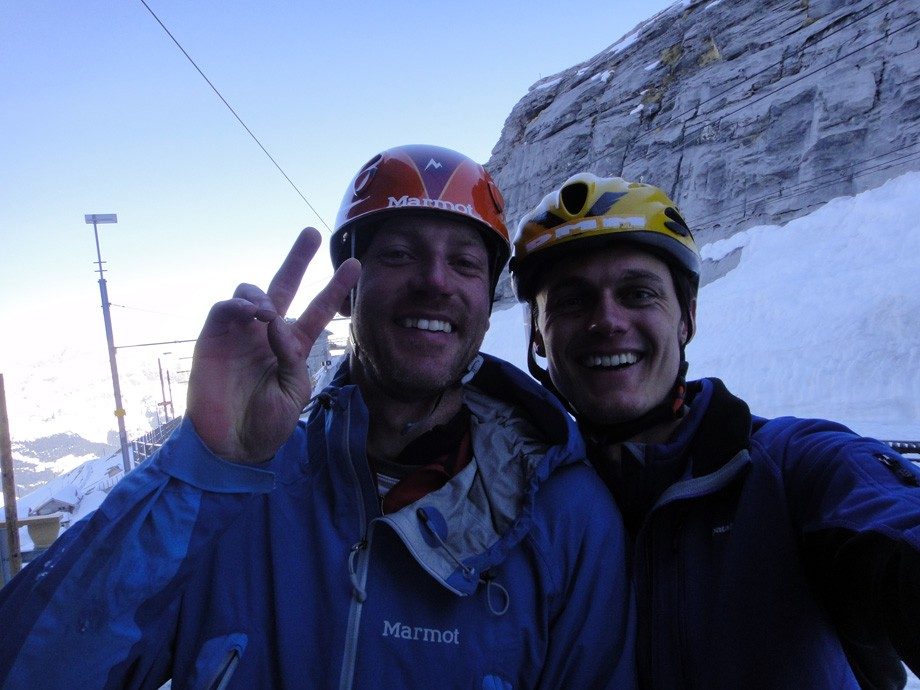
I'd just moved to the Alps. Rob Greenwood flew over from the UK, the forecast was good, and the Chamonix grapevine said the face was in reasonable nick. We were both fit, acclimatised and experienced winter climbers. We drove over in my (much more presentable VW) van, and this time nobody moved us on.
It's one of my fondest mountain memories. People think of the Eiger north face with trepidation and stories of epics, but ours was, by and large, incident-free. It was early March, cold, about minus fifteen, but settled. Rob led the Difficult Crack, we moved together up the icefields, and we were easily at the Death Bivouac by the afternoon of the first day.
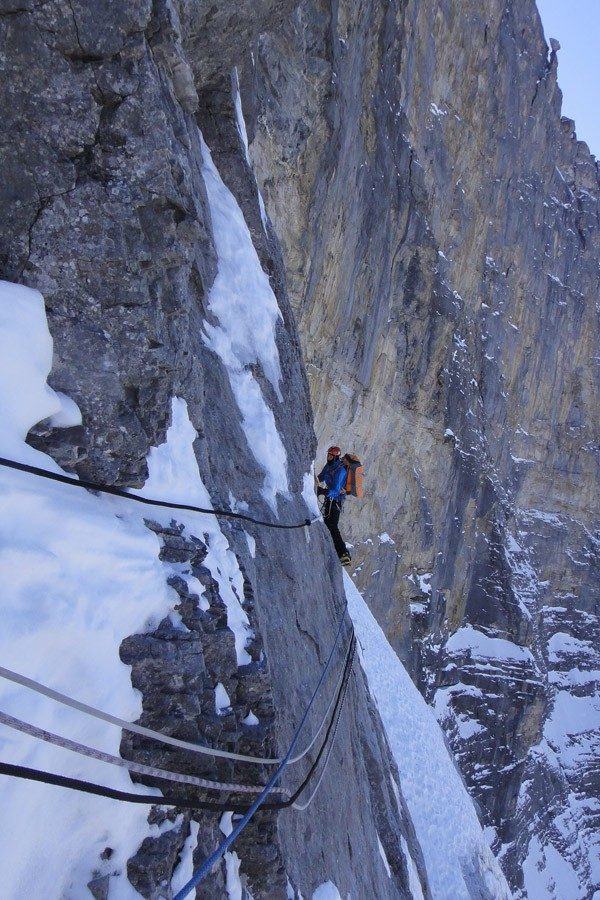
The second day was the real climbing. It was bitterly cold, but with crystal clear skies and no wind on the face. We didn't see a single stone falling. The Ramp was black ice, hard and unprotected. I had a tussle on the steep Brittle Crack and spent the belay thinking about Ueli Steck soloing it. We crossed the White Spider quickly, Rob cruised up the Quartz Crack, and we topped out into a biting summit wind. We dug a (tight) snow tunnel on the summit ridge for the night, and in the morning I got a bit stuck in it. I'd taken my crampons off, the entrance had drifted over, and I had to wriggle my way out on my back, trying not to drop anything down the mountain. Rob found the whole thing very funny.
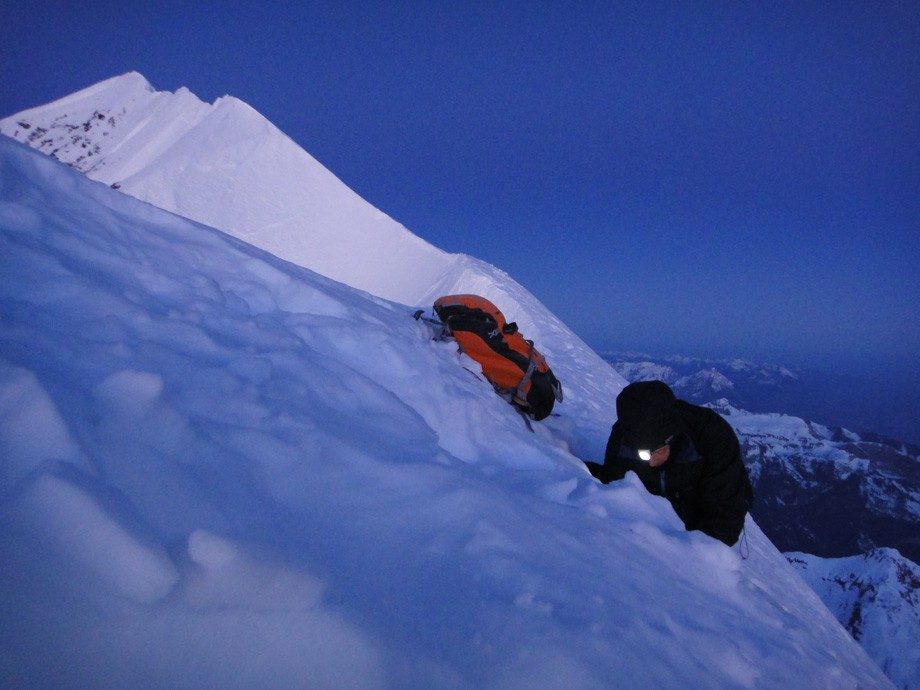
It wasn't an epic, but it was epic. A world-famous climb, enjoyed with one of my best friends. That ascent sums up a period of climbing I thought would never end.
So what brought guiding back? I think it was understanding that the Eiger I tried at 22 and the Eiger I climbed at 30 were in many ways totally different mountains. The first was a misadventure about to happen. The second was a challenge well chosen. I couldn't have guided anyone on the first Eiger. On the second, I could.
A few years later I looked at the British Mountain Guides scheme again and realised that, without planning to, I'd picked up everything it asked for along the way. It felt lucky more than anything, and for the first time, I felt ready. I applied, was accepted, and qualified as an IFMGA mountain guide in 2018, fourteen years after Jules died.
These days I climb with friends, and with clients. The decisions are shared. We look at the forecast, the conditions, how everyone's feeling, and we decide together what the right day is. Sometimes it's a big route. Sometimes it's a small route and a big lunch.
And occasionally it's standing at the bottom of a face under metres of fresh snow, deciding to turn round. I'm better at that one than I used to be. I just don't need the Swiss police to help me any more.